

Good morning. You’re reading the Up First newsletter. Subscribe here to get it delivered to your inbox, and listen to the Up First podcast for all the news you need to start your day.
Today’s top stories
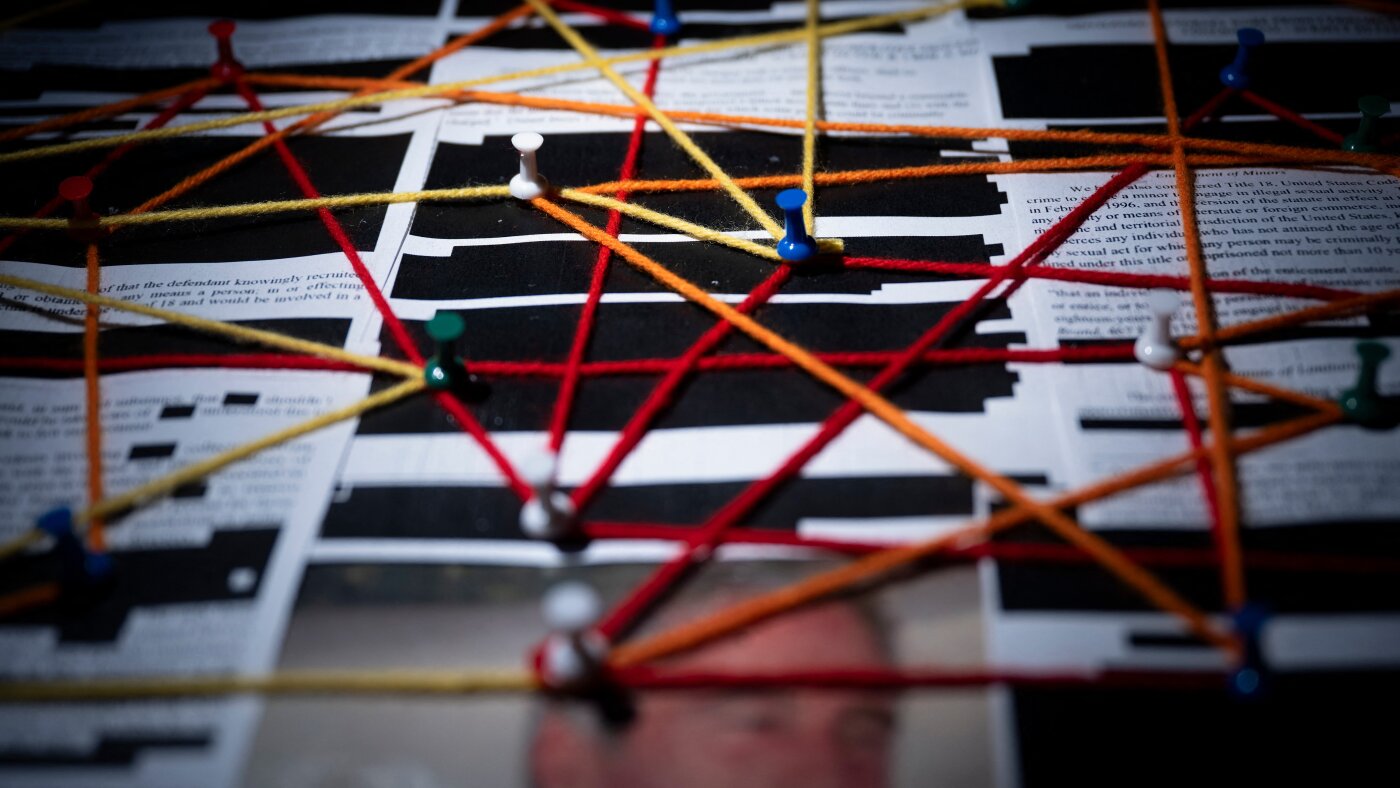
Millions of pages of Epstein files have been released to the public, but an NPR investigation reveals a gap: The Justice Department has removed or withheld dozens of pages related to allegations that President Trump sexually abused a minor decades ago. The Justice Department declined to answer NPR’s questions on the record about these specific files, what’s in them, and why they are not published.
An NPR investigation finds the Justice Department has removed or withheld Epstein files related to sexual abuse accusations that mention President Trump.
Department of Justice and Getty Images/Collage by Danielle A. Scruggs/NPR
hide caption
toggle caption
Department of Justice and Getty Images/Collage by Danielle A. Scruggs/NPR
- 🎧 NPR’s Stephen Fowler tells Up First that an NPR review of the files found an FBI email from last July listing various claims and tips it received about Trump. One report accused Trump of sexually abusing a minor around 1983, when Jeffrey Epstein also allegedly abused her. A field office investigated the report, and the records show the FBI interviewed the accuser four times. Only one of the accuser’s interviews was made public, but it doesn’t mention Trump. According to the DOJ’s tracking system, the Justice Department did not make at least 50 pages of the files public. The White House and the Trump administration have consistently stated that nothing in the documents incriminates the president.
Chaos erupted after Mexico’s military killed a man known as El Mencho, the country’s most powerful drug lord. Now, the country’s cities are slowly returning to normal. Businesses are set to reopen today, and schools in the state of Jalisco will reopen tomorrow. But big questions remain about what El Mencho’s death means for Mexico’s fight against organized crime.
- 🎧 NPR’s Eyder Peralta says the scene in Jalisco’s capital, Guadalajara, is eerie and feels similar to the COVID lockdown. Streets are empty, and some streets have burnt-out vehicles on the medians in the aftermath of the violence that erupted after the drug lord’s death. Mexico’s president, Claudia Sheinbaum, has repeatedly said she doesn’t want to spark a new war against organized crime, as it has typically led to bloodshed. Instead, she says the way to tackle the issue is to address root causes such as education and jobs. Trump is pressuring Mexico for a more frontal fight against the cartels and has threatened to take unilateral military action to address it.
Trump will take center stage tonight to address a joint session of Congress for the first State of the Union address of his second term in office. The prime time address gives the president an opportunity to tout his agenda and shape his party’s messaging ahead of this year’s midterm elections. Trump is expected to start speaking at 9 p.m. ET. If history is any indication, you should prepare for a long night. Here’s what else you need to know ahead of tonight’s speech.
A new federal class action lawsuit alleges federal agents are unconstitutionally retaliating against observers recording immigration enforcement. The nonprofit Protect Democracy and the law firms Dunn Isaacson Rhee and Drummond Woodsum filed the suit, alleging that federal agents are gathering information about observers and labeling them as “domestic terrorists” after telling them they would be added to a “watchlist.” After the lawsuit was filed yesterday, the Department of Homeland Security told NPR that it doesn’t have a database for domestic terrorists. DHS also said that it follows the U.S. Constitution in its law enforcement methods.
Watch this

Newsom in conversation with NPR host Ailsa Chang.
Bronson Arcuri/NPR
hide caption
toggle caption
Bronson Arcuri/NPR
From the biggest names in their fields to experts on the most pressing topics of our time, NPR is breaking down the stories that matter through our in-depth interviews. Immerse yourself in these conversations on your favorite NPR platforms — including the NPR App and NPR.org.
California Gov. Gavin Newsom has been spending his final year in office touring the U.S. and rallying voters for the midterm elections. Newsom, who hasn’t ruled out a run for president in 2028, actively challenges Trump, often mocking the president’s aggressive style on social media. “I’m putting a mirror up to President Trump and I’m fighting fire with fire and I am punching a bully back in the mouth,” he tells NPR. Simultaneously, Newsom has also engaged major right-wing figures like Steve Bannon and Ben Shapiro, drawing criticism from his own party. The governor recently spoke with All Things Considered ahead of the release of his memoir, Young Man in a Hurry. He discussed how his struggles with dyslexia shaped his life, his strategy for dealing with Trump and how the Democratic Party should meet this political moment.
Read more about Newsom’s conversation with NPR’s Ailsa Chang or watch the interview. You can also check out the conversation on NPR’s YouTube page, Consider This and the NPR App.
Behind the story

Local residents inspect damaged cars at the site of a Russian attack in Odesa on Feb. 13, 2026, amid the Russian invasion of Ukraine.
Oleksandr Gimanov/AFP via Getty Images
hide caption
toggle caption
Oleksandr Gimanov/AFP via Getty Images
Four years ago, Russia launched its full-scale invasion of Ukraine. NPR’s Ukraine correspondent Joanna Kakissis and Russia correspondent Charles Maynes reflect on what it’s been like reporting on the war and the toll it’s taken on residents.
We have documented Russia’s full-scale war on Ukraine since the beginning: the awful human cost, the thousands of missing Ukrainian children, the exhausted front line towns, the way this war has changed modern warfare and geopolitics, as well as Ukrainian and Russian society. An invasion that the Kremlin — and many in the West — predicted would end with Ukrainian capitulation within days has now lasted four years, with enormous casualties on both sides, according to British and U.S. sources.
Ukrainians are exhausted. They have adjusted their lives to constant Russian drone and missile attacks, to the turmoil and grief of defending the country in a long war. Many flinch when praised as resilient, as if, they say, there is another choice. “We have paid too high a price to give up,” says Olha Chupikova, from the southern front-line city of Kherson. Her son, a soldier, was killed in action last year. Volodymyr Mykolayenko, a former Kherson mayor who came home last fall after years in Russian captivity, is skeptical that talks sponsored by the Trump administration will actually end the war. “We used to see America as a defender of democracy,” he says. “Now they chose [Russian President Vladimir] Putin as their friend.”
Whatever Trump’s diplomatic aim, it hasn’t been enough to convince Putin to stop his assault. Russians’ hope that Trump could deliver peace has faded as Putin rejected even the most generous terms on offer. Despite Kremlin claims to the contrary, Western sanctions are taking their toll on the economy. State repression used to be aimed squarely at the political opposition. Now, even the invasion’s most ardent supporters have been targeted. Government restrictions now increasingly reach into the digital and cultural space — with bans on movies, music and social media affecting nearly everyone. Open criticism of the war was criminalized early on. Yet there’s a growing sense that amid a conflict with no end in sight, the state’s need for control, too, is endless.
3 things to know before you go

LONDON, ENGLAND – FEBRUARY 22: John Davidson attends the 2026 EE BAFTA Film Awards at The Royal Festival Hall on February 22, 2026 in London, England. (Photo by Dominic Lipinski/Getty Images)
Dominic Lipinski/Getty Images/Getty Images Europe
hide caption
toggle caption
Dominic Lipinski/Getty Images/Getty Images Europe
- The British Academy of Film and Television Arts Awards (BAFTAs) released an apology yesterday after the BBC aired a delayed broadcast of the ceremony that included a man with Tourette syndrome shouting a racial slur.
- Scientists discovered a new species of large, horned, fish-eating Spinosaurus dinosaur — the first in over a century. The dinosaur species dates back to the Jurassic period, over 140 million years ago.
- As the war in Ukraine enters its fifth year, NPR’s Far-Flung Postcards brings you to Kyiv, where candles are the last option during wartime blackouts.
This newsletter was edited by Suzanne Nuyen.
